

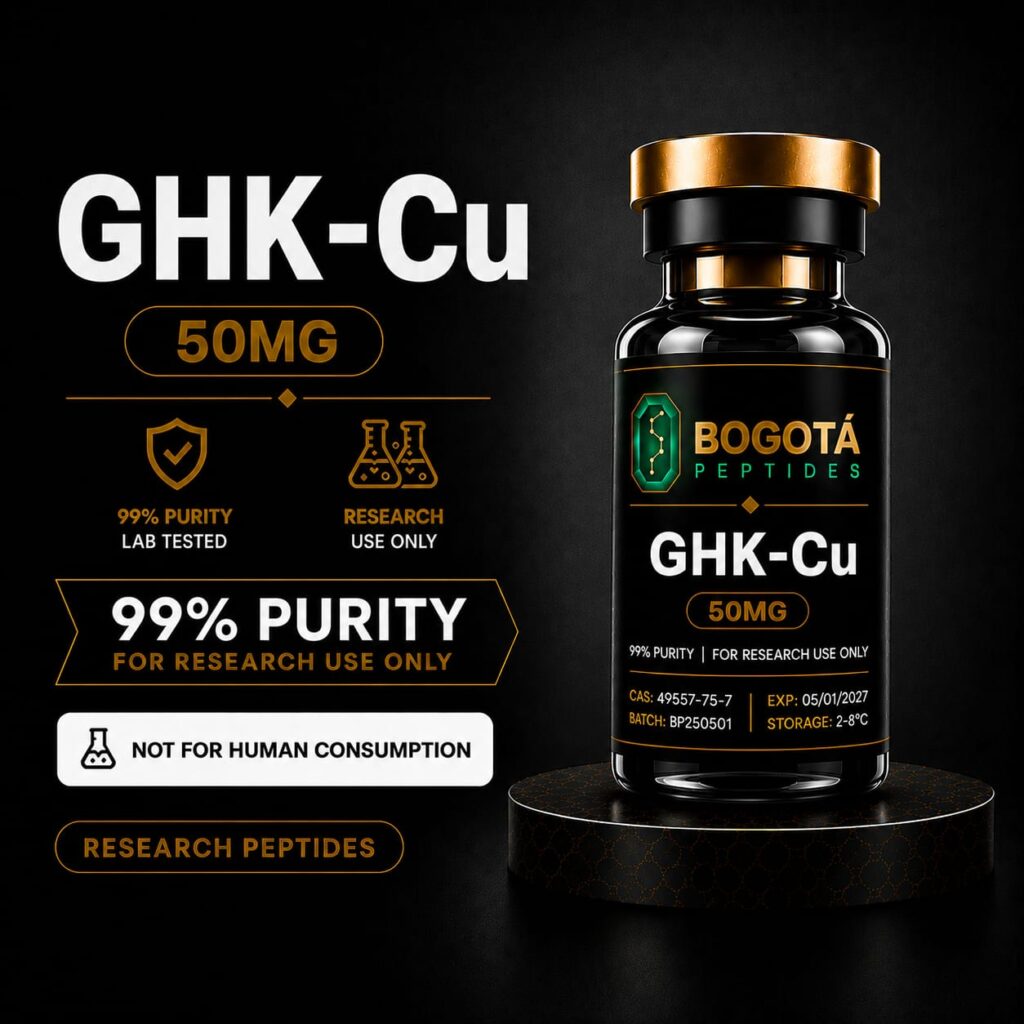
Biological Functions and Scientific Interest in Copper Peptides
Introduction
GHK-Cu, often referred to as a copper peptide, is one of the most extensively studied naturally occurring peptides in regenerative biology. First identified in human plasma in the 1970s, GHK-Cu consists of the tripeptide glycyl-L-histidyl-L-lysine (GHK) bound to a copper ion. Over the decades, researchers have investigated its role in tissue repair, extracellular matrix regulation, skin biology, hair follicle function, cellular signaling, and healthy aging.
Interest in GHK-Cu research continues to grow globally as scientists seek to better understand the molecular mechanisms involved in tissue maintenance and regeneration. Unlike many experimental compounds that target a single biological pathway, GHK-Cu appears to interact with multiple signaling systems simultaneously, making it a unique area of scientific investigation.
What Is GHK-Cu?
GHK-Cu is a naturally occurring copper-binding peptide found in human plasma, saliva, and urine. Researchers discovered that concentrations of GHK decline with age, leading to growing interest in understanding whether this reduction may influence tissue repair and regenerative processes.
The peptide’s structure is relatively simple. It consists of three amino acids:
– Glycine
– Histidine
– Lysine
When combined with copper, these amino acids form the GHK-Cu complex. Copper itself is an essential trace mineral involved in numerous physiological functions, including enzyme activity, antioxidant defense, connective tissue formation, and cellular communication.
Researchers believe GHK-Cu may function as a signaling molecule capable of influencing multiple biological systems involved in tissue maintenance and repair.
The Discovery of GHK-Cu
Scientific interest in GHK began during research conducted by Dr. Loren Pickart in the 1970s. Early studies suggested that factors present in younger blood plasma appeared capable of influencing biological activity in older tissues.
Further investigation led to the identification of GHK and later GHK-Cu. Researchers observed that the peptide appeared to influence cellular behavior in ways that warranted deeper investigation.
Since then, hundreds of scientific papers have examined GHK-Cu in laboratory and experimental settings.
Copper and Biological Function
Copper plays a crucial role throughout the human body.
It contributes to:
– Energy production
– Connective tissue formation
– Antioxidant defense systems
– Iron metabolism
– Enzyme activity
– Cellular signaling
Because GHK binds copper efficiently, researchers believe it may help transport copper to tissues where it is required for biological processes.
This copper-binding capability remains one of the central reasons scientists continue to investigate GHK-Cu.
GHK-Cu and Cellular Signaling
One of the most intriguing aspects of GHK-Cu research is its apparent ability to influence gene expression.
Rather than functioning as a simple stimulant, GHK-Cu appears to interact with numerous cellular pathways simultaneously. Researchers have reported changes in the activity of genes associated with:
– Tissue repair
– Inflammation regulation
– Antioxidant defense
– Cellular maintenance
– Structural protein production
This systems-based activity distinguishes GHK-Cu from many compounds that affect only one specific target.
Scientists continue to investigate how these signaling effects contribute to tissue health and regeneration.
GHK-Cu and Collagen Research
Collagen is the most abundant structural protein in the human body.
It contributes to:
– Skin structure
– Connective tissue integrity
– Tendon strength
– Ligament support
– Tissue repair processes
Several studies have investigated whether GHK-Cu influences fibroblasts, the cells responsible for producing collagen and other structural proteins.
Researchers have reported effects involving:
– Collagen synthesis
– Elastin production
– Glycosaminoglycan formation
– Extracellular matrix remodeling
Because connective tissue integrity is essential for maintaining healthy biological function, these findings have generated significant interest within regenerative science.
Extracellular Matrix Research
The extracellular matrix is a complex network of proteins and structural molecules surrounding cells.
This matrix provides:
– Structural support
– Mechanical stability
– Cellular communication pathways
– Tissue organization
Research suggests that GHK-Cu may influence processes involved in extracellular matrix maintenance and remodeling.
Scientists continue to study how these effects may contribute to tissue repair and long-term structural integrity.
GHK-Cu and Tissue Repair
Tissue repair remains one of the most extensively studied areas of GHK-Cu research.
Laboratory investigations have examined how GHK-Cu interacts with:
– Fibroblasts
– Immune cells
– Endothelial cells
– Structural proteins
Researchers have observed activity related to wound healing processes, including cellular migration and matrix remodeling.
These observations have led to ongoing interest in understanding how naturally occurring peptides contribute to tissue maintenance and regeneration.
Angiogenesis and Blood Vessel Research
Angiogenesis refers to the formation of new blood vessels.
Adequate blood flow is essential for:
– Oxygen delivery
– Nutrient transport
– Tissue repair
– Cellular health
Researchers have explored whether GHK-Cu influences signaling pathways associated with blood vessel development.
Although investigations remain ongoing, these findings have contributed to growing scientific interest in regenerative applications.
GHK-Cu and Skin Biology
Skin research represents one of the largest areas of investigation involving GHK-Cu.
Scientists have examined how the peptide interacts with processes related to:
– Skin structure
– Tissue remodeling
– Cellular renewal
– Connective tissue organization
Research has explored interactions with fibroblasts and other cell types responsible for maintaining healthy skin architecture.
Because skin aging involves multiple interconnected biological processes, GHK-Cu remains an important area of study in dermatological research.
Hair Follicle Research
Hair biology is another field in which GHK-Cu has attracted attention.
Researchers have investigated potential effects involving:
– Hair follicle signaling
– Cellular communication
– Tissue environment surrounding follicles
– Blood vessel formation near follicles
Scientists continue exploring how these mechanisms interact within the broader context of hair biology and follicular health.
GHK-Cu and Oxidative Stress
Oxidative stress occurs when reactive oxygen species exceed the body’s antioxidant defenses.
Researchers have examined whether GHK-Cu influences pathways involved in:
– Antioxidant activity
– Cellular protection
– Inflammatory signaling
– Tissue resilience
Laboratory findings suggest interactions with genes and proteins associated with cellular defense systems.
These observations continue to drive interest in understanding the peptide’s broader biological functions.
Inflammation Research
Inflammation is an essential component of tissue repair and immune function.
However, chronic inflammation can contribute to tissue dysfunction and age-related decline.
Researchers have studied how GHK-Cu may interact with signaling pathways involved in inflammatory regulation.
Understanding these mechanisms remains an active area of scientific investigation.
GHK-Cu and Healthy Aging
One reason GHK-Cu has attracted significant attention is the observation that natural levels decline with age.
Researchers have investigated whether reductions in GHK-Cu concentrations may be associated with:
– Slower tissue repair
– Changes in skin structure
– Altered cellular signaling
– Reduced regenerative capacity
Although many questions remain unanswered, these findings have made GHK-Cu an important topic within healthy aging research.
Current Areas of Scientific Interest
Modern GHK-Cu research continues to expand into multiple fields, including:
– Regenerative biology
– Cellular signaling
– Tissue engineering
– Skin research
– Hair follicle research
– Connective tissue studies
– Healthy aging science
Advances in molecular biology and gene expression analysis have provided researchers with new tools to investigate the peptide’s mechanisms and biological significance.
Limitations of Current Research
Despite encouraging findings, important limitations remain.
Many studies have been conducted in:
– Cell cultures
– Laboratory models
– Experimental systems
Further research is necessary to fully understand the biological significance of observed effects and how they relate to complex living systems.
Researchers continue to investigate unanswered questions regarding mechanisms, pathways, and long-term implications.
Conclusion
GHK-Cu remains one of the most extensively studied naturally occurring peptides in regenerative biology. Scientific investigations have examined its involvement in tissue repair, extracellular matrix regulation, collagen synthesis, skin biology, hair follicle research, inflammation, oxidative stress, and healthy aging.
Its ability to interact with multiple biological pathways simultaneously has made it a particularly interesting subject within modern research. As scientific understanding continues to evolve, GHK-Cu is likely to remain a major focus of regenerative and cellular biology studies for years to come.
This article is intended solely for educational and scientific discussion of published research. It is not medical advice and does not recommend any use of GHK-Cu outside approved research settings.